17 U.S.C. § 1201(a)(1) — DMCA Section 1201 Rulemaking
Burden
of Proof
A text analysis and visualization of the public record from nine triennial rulemaking proceedings under 17 U.S.C. § 1201(a)(1) — mapping more than 55,000 pages of petitions, comments, and reply comments filed by scores of organizations, law school clinics, trade associations, academics, and individuals since 2000.
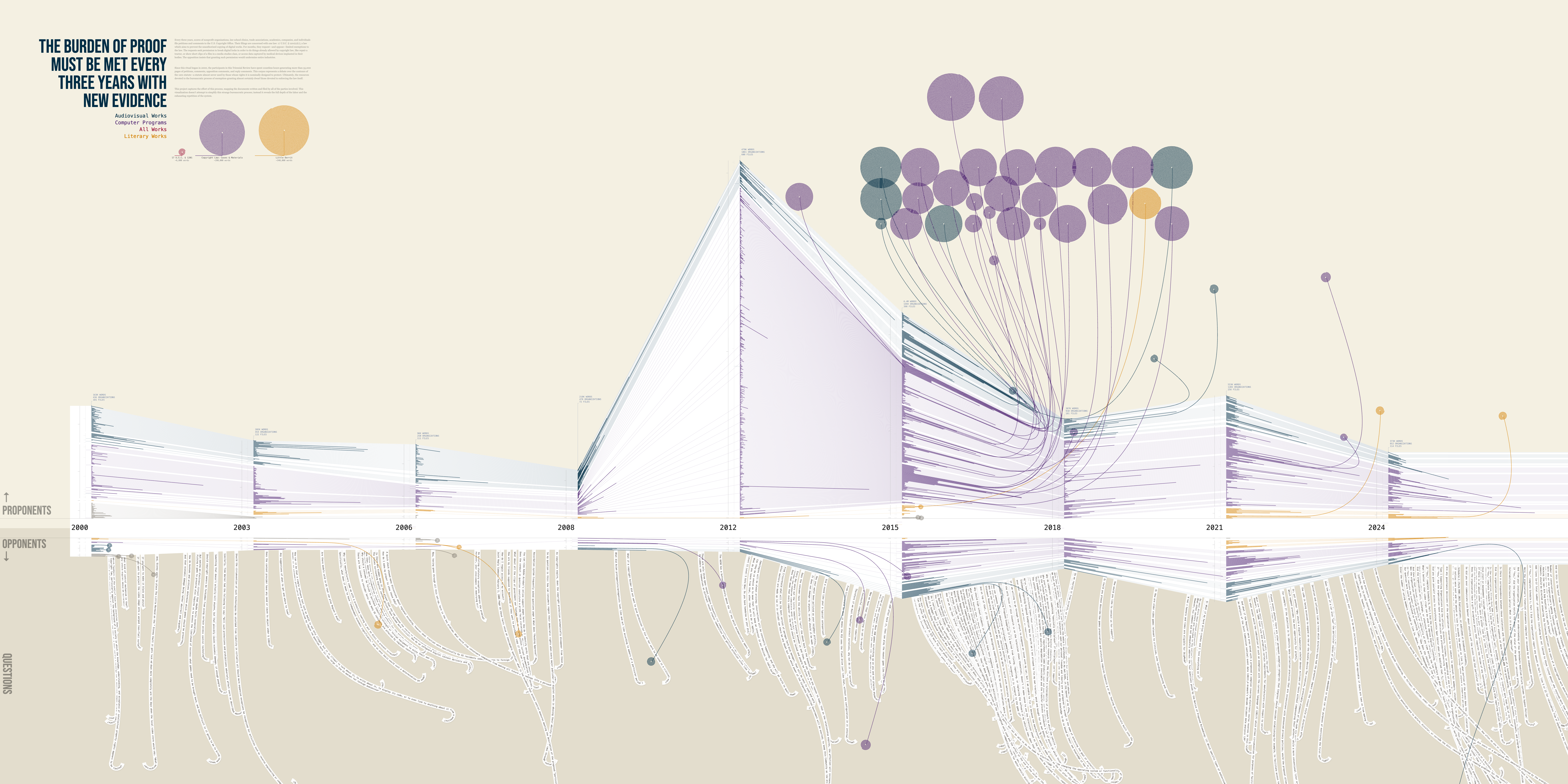
The 1201 Corpus Tree — petitions, oppositions, and reply comments filed 2000–2024, organized by exemption class. View at full dimensions →
Project Overview
The Corpus
Every three years, scores of nonprofit organizations, law school clinics, trade associations, academics, companies, and individuals file petitions and comments to the U.S. Copyright Office. Their filings are concerned with one law: 17 U.S.C. § 1201(a)(1), a prohibition on circumventing technological protection measures that control access to copyrighted works.
For months, they request—and oppose—limited exemptions to the law. The requests seek permission to break digital locks in order to do things already allowed by copyright law, like repair a tractor, show short clips of a film in a media studies class, or access data captured by medical devices implanted in their bodies.
The Visualization
The 1201 Corpus Tree arranges filings as branches on a bilateral axis: proponents above, opponents below. Each branch represents a filing; its position along the vertical axis reflects the relative size of the case being made. Branches are colored by the exemption class they address and organized chronologically left to right across nine triennial rounds.
This visualization doesn’t attempt to simplify this strange bureaucratic process; instead it reveals the full depth of the labor and the exhausting repetition of the system. Explore the interactive version →
The Stakes
Since this ritual began in 2000, participants in the Triennial Review have generated more than 55,000 pages of petitions, comments, opposition comments, and reply comments. This corpus represents a debate over the contours of a statute almost never used by those whose rights it is nominally designed to protect.
Ultimately, the resources devoted to the bureaucratic process of exemption-granting almost certainly dwarf those devoted to enforcing the law itself.
The Data
Source documents were processed using NLP pipelines to extract named entities—organizations, individuals, and the exemption classes they address—making it possible to track which stakeholders appear across multiple proceedings and how the structure of the argument has evolved over twenty-five years.
About the Authors
Buy a Print
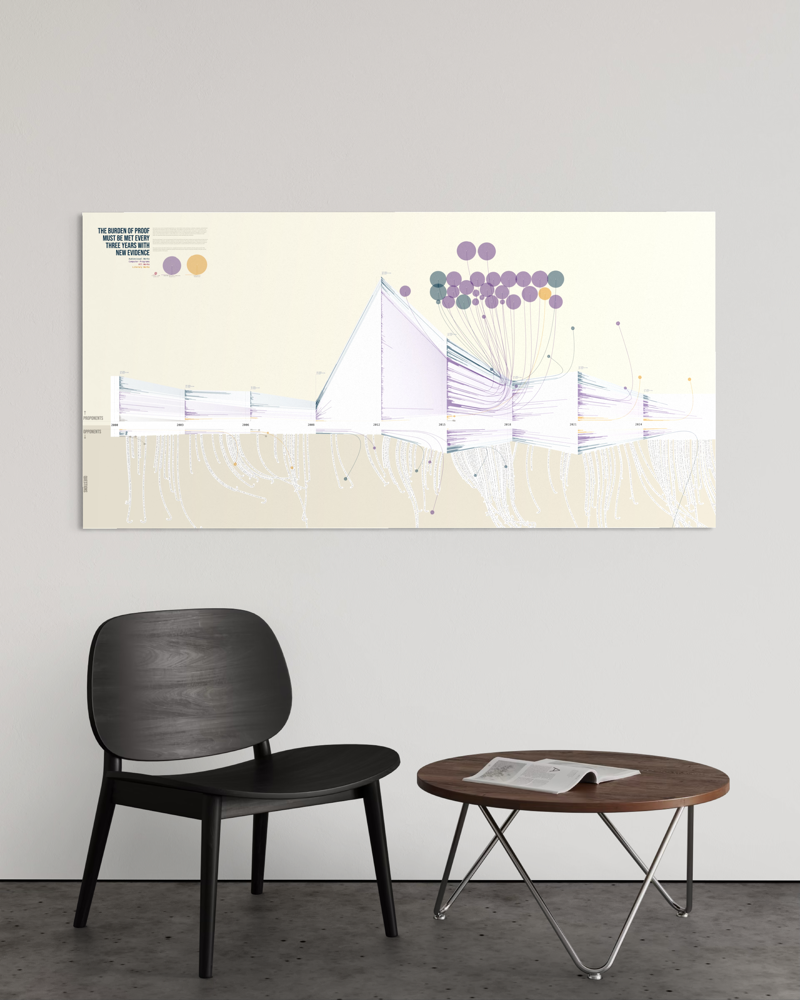
The Burden of Proof visualization is available as an archival-quality poster print in three sizes. Each print ships rolled in a protective tube.